
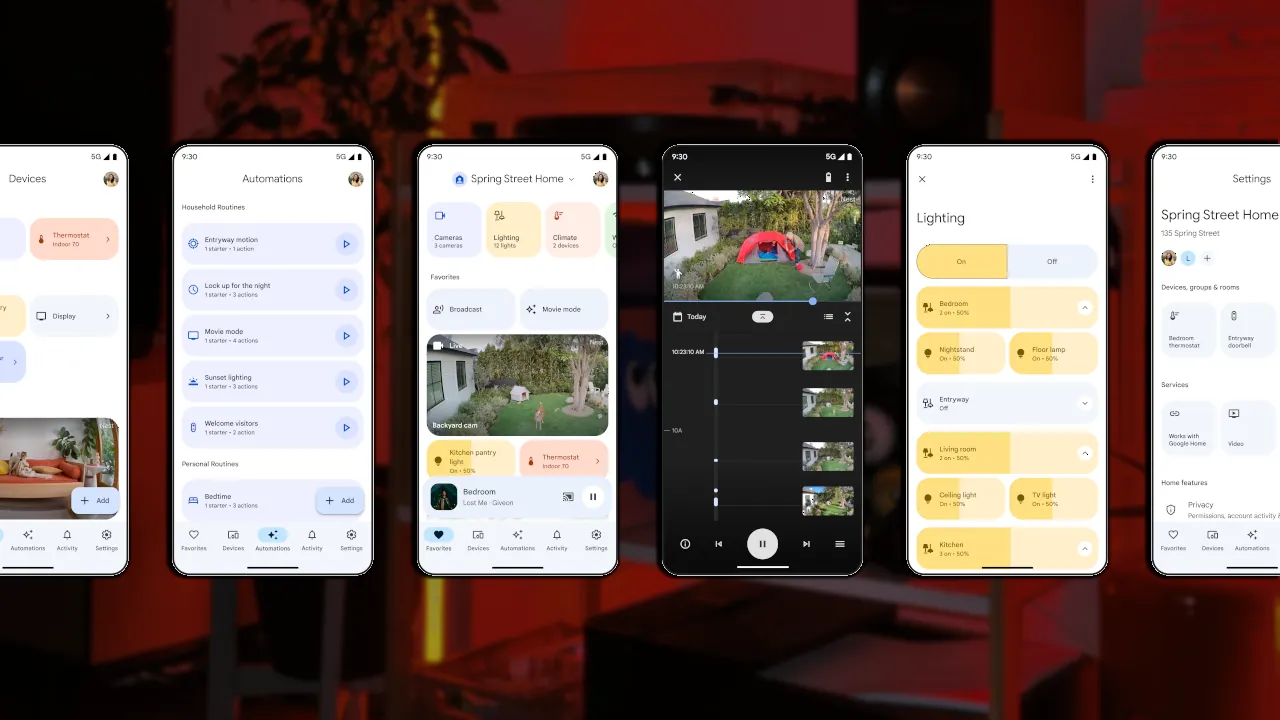
Matter promises one universal language for every smart home brand, and Google Home was one of the standard’s founding members. That backing does not automatically mean Google’s own app delivers on the promise. If you are running an all-Google setup and wondering whether Matter actually changes anything day to day, the honest answer sits somewhere between yes and not yet.
What Google Home Finally Got Right
For years, the biggest Matter complaint about Google Home was not really a Matter problem. It was a Google problem. Even Matter certified devices, built specifically to work over your local network without a cloud round trip, were still being routed through Google’s servers by the Google Home app itself. A lightbulb turning on could depend on Google’s cloud responding, even though Matter itself never required that.
That finally changed. The Google Home app now handles basic actions locally for common device types including lights, plugs, and thermostats. Turning something on or off, or dimming a light, keeps working even if your internet connection drops. It is a real fix, not a marketing claim, and it addresses the single most common complaint Google Home users had about Matter.
Where Google Home Still Falls Behind
Local control has limits, and they are worth knowing before assuming Matter has fully arrived on Google Home. Voice commands, scheduled routines, and remote access away from home still depend on an internet connection, Matter certification or not. Only the most basic direct actions run locally right now.
Version support is the bigger gap. As of early 2026, Google Home still supports only the original Matter 1.0 specification. The standard itself has moved well past that. Our breakdown of Matter 1.6 covers features like NFC pairing and Joint Fabric sharing, none of which Google Home can use yet. Device types added in later versions, including robot vacuums, are not supported either. If a new gadget advertises Matter compatibility, it is worth checking which version it actually needs before assuming Google Home will recognize it.
The Duplicate Device Trap
A specific problem shows up often enough to warrant its own warning. Many devices, Philips Hue Bridge bulbs being the most common example, already connect to Google Home through an older cloud-to-cloud integration. Pairing that same device again through Matter does not replace the old connection. It adds a second one running alongside it.
The result is two entries for the same bulb, each fighting the other for control. The fix is simple once you know to look for it. Pick one integration method for a device and remove the other, rather than assuming Matter pairing automatically takes over. If your lights or plugs are behaving strangely after a recent Matter update, this duplicate connection is the first thing worth checking. Google’s own Google Home Matter support page walks through the setup steps if you want to confirm which method a device is currently using.
Should You Rely on Google Home’s Matter Support?
For basic devices doing basic jobs, Matter on Google Home genuinely works better today than it did a year ago, and your lights will keep responding even during a rare outage. For anything beyond those basics, you are still leaning on Google’s cloud the same as before Matter existed. That gap fits a broader pattern, our look at local-first smart homes covers why more of the industry is moving away from cloud dependency, and where Google Home still has catching up to do. Matter and Thread remain the right foundation to build on. Google’s own implementation of that foundation is simply not finished yet.
Image Credit: Google (App Screenshots)