
Several companies have landed on the same idea at once. Your next smart home hub should think locally, running the AI inside your house instead of shipping your family’s video to somebody else’s servers. What looked like a hobbyist project two years ago is now a product category with serious manufacturing behind it. The pitch is appealing and the hardware is genuinely clever. The part worth reading carefully is what happens to your monthly bill.
How a Smart Home Hub Thinks Locally
Here is the setup most people have today. A camera spots motion, uploads a clip to a company server, an AI somewhere in a data center decides whether it saw a person or a passing cat, and a notification comes back to your phone. You pay a monthly fee for the privilege.
A local AI hub moves that middle step into your living room. The box sits on your network, holds the storage, and runs the analysis itself. Think of it as the difference between mailing every roll of film to a lab and having the darkroom in your hallway closet.
Underneath, most of these devices are network storage boxes with an AI chip added. That heritage explains both the capability and the size of the enclosures. It also connects directly to the local-first shift we have been tracking all year.
UGreen HomeAgent Bets Big on Local
UGreen HomeAgent is the most ambitious version announced so far, and the most complicated to assess.
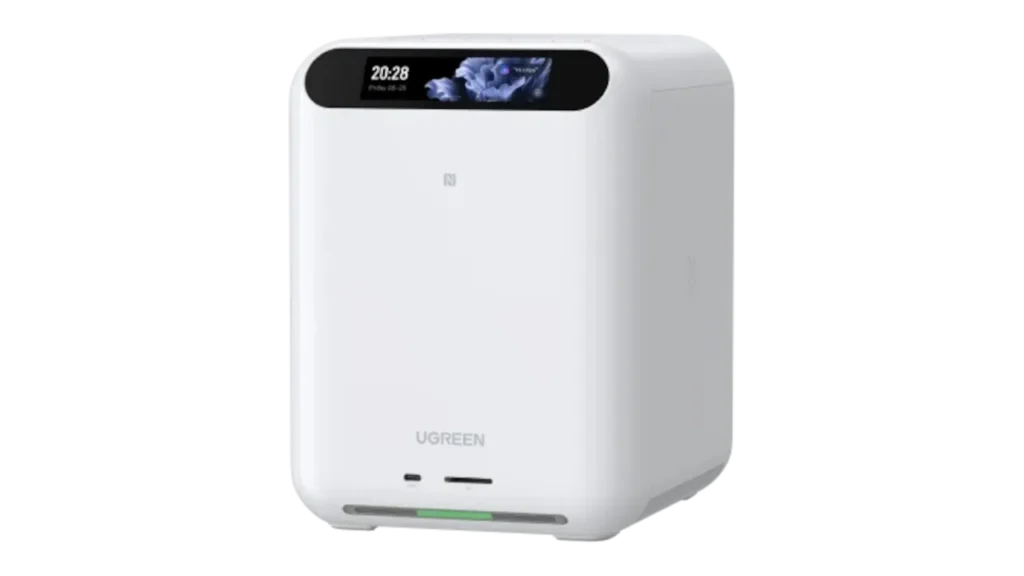
Image Credit: UGreen
UGreen revealed the range at a launch event in early September 2026. It spans three hubs: the HomeAgent HA100, the HA100 Pro, and the higher-end MasterAgent MA100, which runs on NVIDIA’s Jetson Thor T5000 platform. Around them sits a full ecosystem of SynCare cameras, a smart speaker, and UGreen Gallery photo frames.
The assistant is called Uliya. Rather than scrubbing through a recording timeline, you search your own footage in plain language for terms like “package” or “pet” or a family member’s name. Uliya answers spoken questions about when something happened and condenses long recordings into short summaries.
Encouragingly, this is not a closed garden. HomeAgent supports Matter, and UGreen’s compatibility list already covers devices from Aqara, ThirdReality, SwitchBot, and Eve, though the first phase is limited to lights, switches, sensors, and curtains. If those protocol names are unfamiliar, our guide to Matter and Thread covers the ground.
Two things to hold onto. First, UGreen has not published final retail pricing. What exists is a pre-order deposit starting at $50, which reserves a 50 percent Super Early Bird discount ahead of a Kickstarter campaign launching on October 27, 2026. That makes HomeAgent a crowdfunding product rather than something on a shelf, with all the delivery risk that carries.
Second, be careful with the performance figures. UGreen rates the MA100 at up to 2,070 FP4 TFLOPS, but the HA100 and HA100 Pro are quoted using combined TOPS totals drawn from more than one processing component. Those are different measurement systems, so the numbers cannot be lined up against each other or against rival hubs.
Anker MindBase Takes the Matter Route
The Anker MindBase is the more conventional product, and probably the more relevant one for most homes.
MindBase runs what Anker calls a TrueSmart Agent on a 26 TOPS AI core, handling real-time camera analysis, event summaries, and alerts on the device. Storage is a 64GB internal drive plus two bays taking it to 48TB. It works as a Matter 1.5 controller with Wi-Fi, Bluetooth, Thread, and Zigbee built in, and it is designed to sit alongside Apple Home, Google Home, Amazon Alexa, and Home Assistant rather than replace them. Anker states that no personal data goes to the cloud and that no subscription is required.
What Anker has not announced is a price or a release date, which makes it a promise rather than a product for now.
One footnote worth knowing: Anker is folding Eufy, Soundcore, SOLIX, and eufyMake into the single Anker brand. If you own Eufy gear, expect the badge to change.
The Local AI Hub You Can Buy Today
While the headline hardware sits in pre-order and pre-announcement, the SwitchBot AI Hub has been shipping since early 2026 at $259.99.
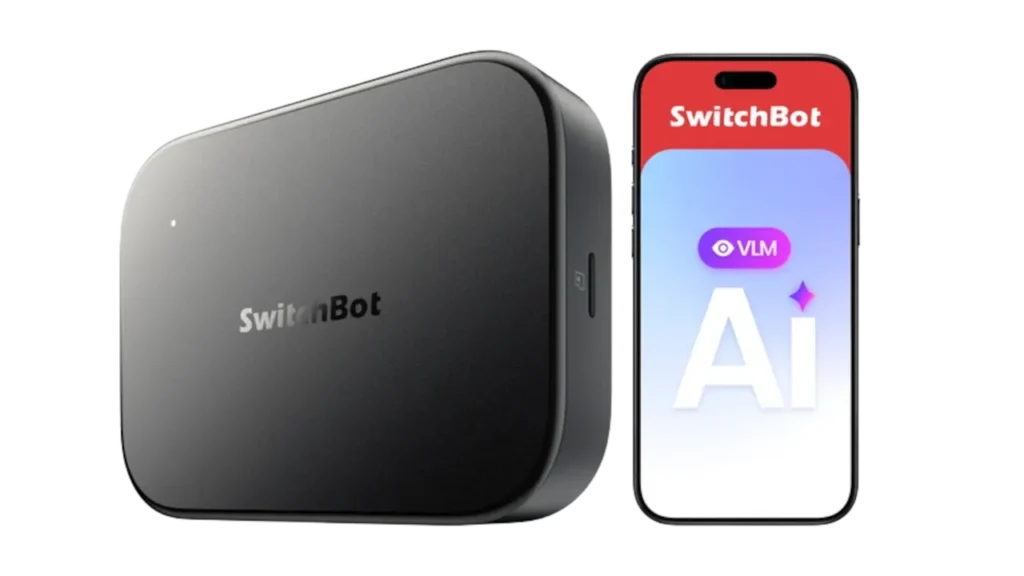
Image Credit: Eufy / Anker
It runs a Vision Language Model on the device, which is the technology that lets a hub describe what a camera sees in plain sentences instead of flagging a motion blob. It handles up to eight cameras, works as a local video recorder using Frigate, accepts third-party cameras over RTSP, and takes up to 16TB of storage. Those written descriptions can then trigger automations, so a routine fires based on what actually happened.
Read the Subscription Fine Print
Here is the part the launch events skate past.
Local processing and no monthly bill are two separate promises, and the hardware only guarantees one of them. On the SwitchBot AI Hub, the Vision Language Model features come with a one-month trial and then cost $4.99 per month, with a further plan for the agent features. The analysis happens in your house. The invoice still arrives.
UGreen positions HomeAgent as an alternative to recurring cloud storage fees, which is the right instinct. But the camera licensing policy and long-term software costs have not been documented yet, so there is nothing firm to hold the company to. Anker is saying the right things about MindBase, though with no price announced there is equally little to check.
Treat “local” as a claim about where the computing happens, not as a guarantee about your bank statement. Our breakdown of hidden smart home fees is a useful reference for the questions to ask.
If You Would Rather Build It Yourself
Some people build this instead of buying it. Home Assistant includes a voice feature called Assist, which chains together wake word detection, speech to text, intent handling, and text to speech. Each stage can run on your own hardware, and Home Assistant also has an Ollama integration so a language model on your own machine can act as the conversation agent.
The catch is not the hardware. A spare desktop with a mid-range graphics card has plenty of compute for this. The catch is that you now own four moving parts, their updates, and every failure between them. That is the entire pitch behind a boxed hub. You pay money instead of paying attention.
What This Means for Your Home Right Now
Nothing you need to act on this month. UGreen’s range is a crowdfunding campaign. Anker’s has neither price nor date. The one you can buy today wants a subscription for its headline feature.
The direction still matters. For years, adding intelligence to a smart home meant adding a cloud account, and that assumption is now being challenged by companies with real manufacturing behind them rather than only by hobbyist projects. Watch for Anker’s pricing announcement in particular. A Matter hub with capable local AI at an ordinary consumer price would genuinely change the calculation.
In the meantime, you can capture most of the benefit today. Choose cameras that record to local storage instead of the cloud, and pick a hub that runs your automations without an internet connection.