
Philips Hue just emptied its entire fall lineup onto the table at IFA 2026 in Berlin. There is a surprise partnership that pulls Nanoleaf panels into the Hue app, an AI feature that writes your automations for you, a small camera that handles TV sync without an HDMI cable, and a stack of new decorative lights. Most of it is on sale today. Here is what actually matters for your setup.
Custom AI Behaviors Let You Describe an Automation
The headline software feature is called Custom AI Behaviors, and it is exclusive to the Hue Bridge Pro. Instead of building an automation by picking a trigger, then a condition, then an action, you simply type what you want in plain language. The Hue AI assistant assembles the rest.
Signify gave a few examples of things that were not possible in the app before:
- Making a switch or sensor behave differently on weekends than on weekdays
- Turning on a scene when it actually gets dark outside, rather than at a fixed clock time
- Firing a specific scene the moment your TV sync starts running
That last one is a good example of why this matters. Those conditional rules used to require a separate automation platform. Now they live inside the Hue app. It fits neatly into the wider AI lighting shift we have been tracking all year.
Custom AI Behaviors arrives in early October for Bridge Pro owners.
Back-Up and Restore Finally Arrives
Hue is also previewing Back-up & Restore, a feature people have been asking for since roughly forever. It saves your lights, accessories, rooms, zones, scenes, and automations to the Hue cloud.
The backup half works on both the standard Hue Bridge and the Bridge Pro. Restoring a saved setup is Bridge Pro only at launch. Signify has not given a firm release date, saying only that it is still in development.
Sonos Control Lands on Hue Switches in November
The Sonos integration is now official. Selected Hue switches, including the Tap Dial Switch, will be able to run your speakers directly. You can assign Sonos Favorites to individual buttons, play and pause, change the volume, and skip tracks.
We covered the mechanics of this when it first surfaced, including why you can control your Sonos speakers without an internet connection. The rollout is scheduled for November.
Nanoleaf Panels Are Joining the Hue App
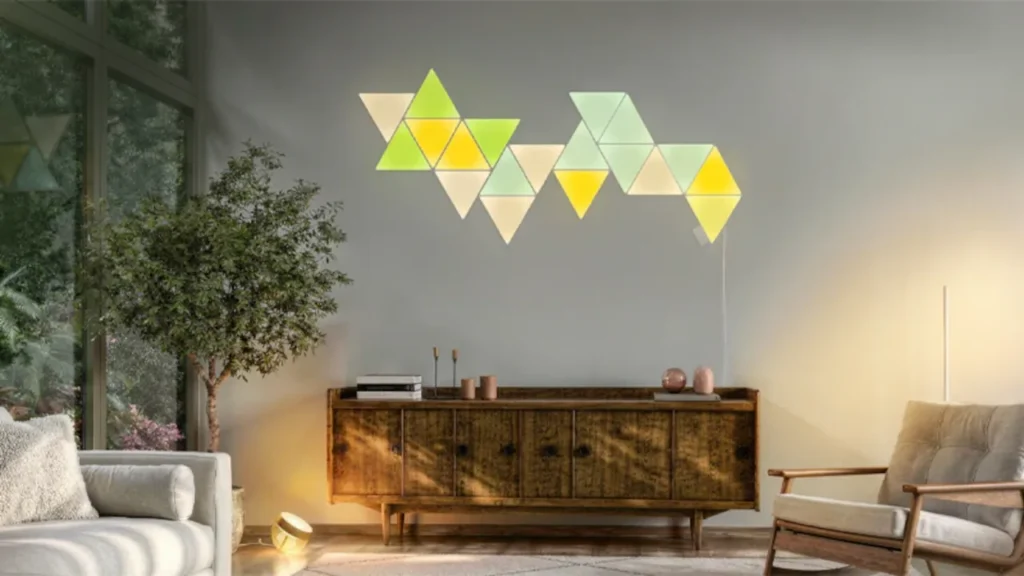
This is the genuine surprise of the event. A new partnership brings compatible Nanoleaf Shapes panels, meaning Hexagons, Triangles, and Mini Triangles, into the Philips Hue ecosystem.
The bridge between the two brands is a small adapter called the Hue Wall Light Module, sold separately and available now. Plug it into your Nanoleaf panels and they show up in the Hue app, where they can join Hue scenes, automations, and entertainment areas.
For anyone running both brands side by side, this collapses two apps into one. Older Nanoleaf panels formerly sold as Aurora are not supported.
The Cheaper TV Sync Options Are Here
Two new products drop the cost of entry for TV light syncing, and both are on sale today.
The Hue Play Screen Sync is Philips Hue’s first camera-based solution. A fisheye lens sits on top of your TV and reads the whole screen edge to edge. Because it watches the picture rather than intercepting a cable, it works with absolutely anything on screen. That includes native smart TV apps, broadcast television, and HDMI devices.
The Hue Play HDMI sync box 4K is the slimmed-down version of the flagship box, landing at roughly a third of what the Hue Play HDMI sync box 8K costs. It carries a single HDMI input instead of four and supports 4K at 60Hz over HDMI 2.0. This is the product that leaked back in August under the name Sync Box Lite. The camera-based Screen Sync sits lower still, making it the cheapest way into the Hue entertainment system so far.
Both new devices support a bridgeless mode. You can pair a single Play gradient strip light over Bluetooth with no Hue Bridge at all. Add a Bridge or Bridge Pro later and you can expand to ten lights for a full surround effect.
Signify says the HDMI boxes remain more color-accurate than the camera. The camera wins on flexibility.
Gradient Strips That Fit Bigger Screens
The Play gradient strip lights have been redesigned and are now cuttable, so you can trim them to fit your specific TV. For the first time, the range covers screens up to 100 inches.
The Play gradient strip light pro arrives on September 15. This is the model that leaked earlier this summer. The standard 85-inch Play gradient strip light follows on October 6.
The Design Lights: Liane, Signe and Festavia
Hue also went hard on decorative fixtures, most of which are available today.
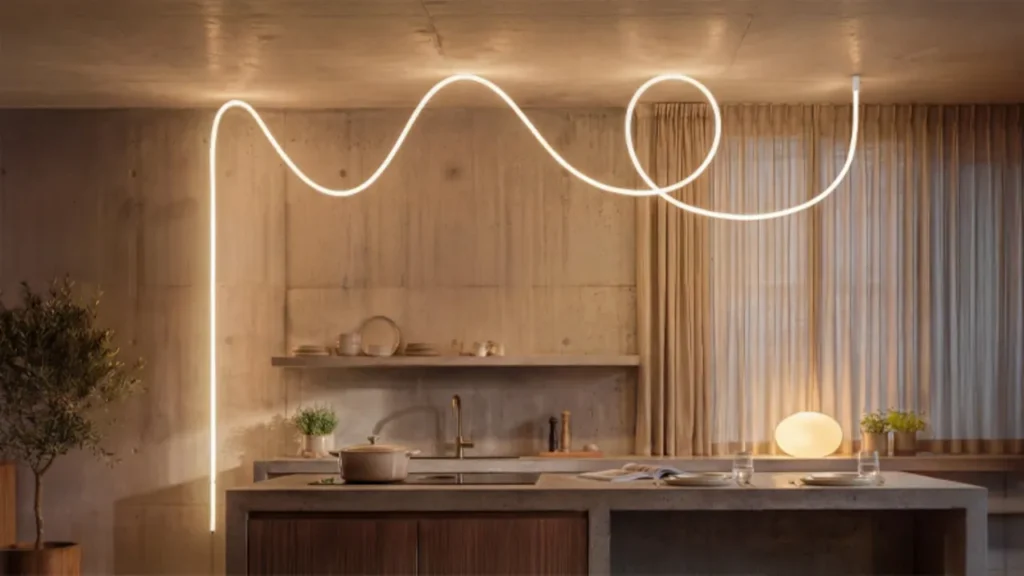
- Hue Liane 360° rope light uses OmniGlow optics to glow evenly around the full circumference, with no visible dots. Comes in three-meter and five-meter lengths and can wrap walls, furniture, or ceiling lines.
- Hue Signe pendant, pendulum and pole. Sculptural, ultra-slim fixtures aimed at contemporary interiors. North American availability comes later in the fall.
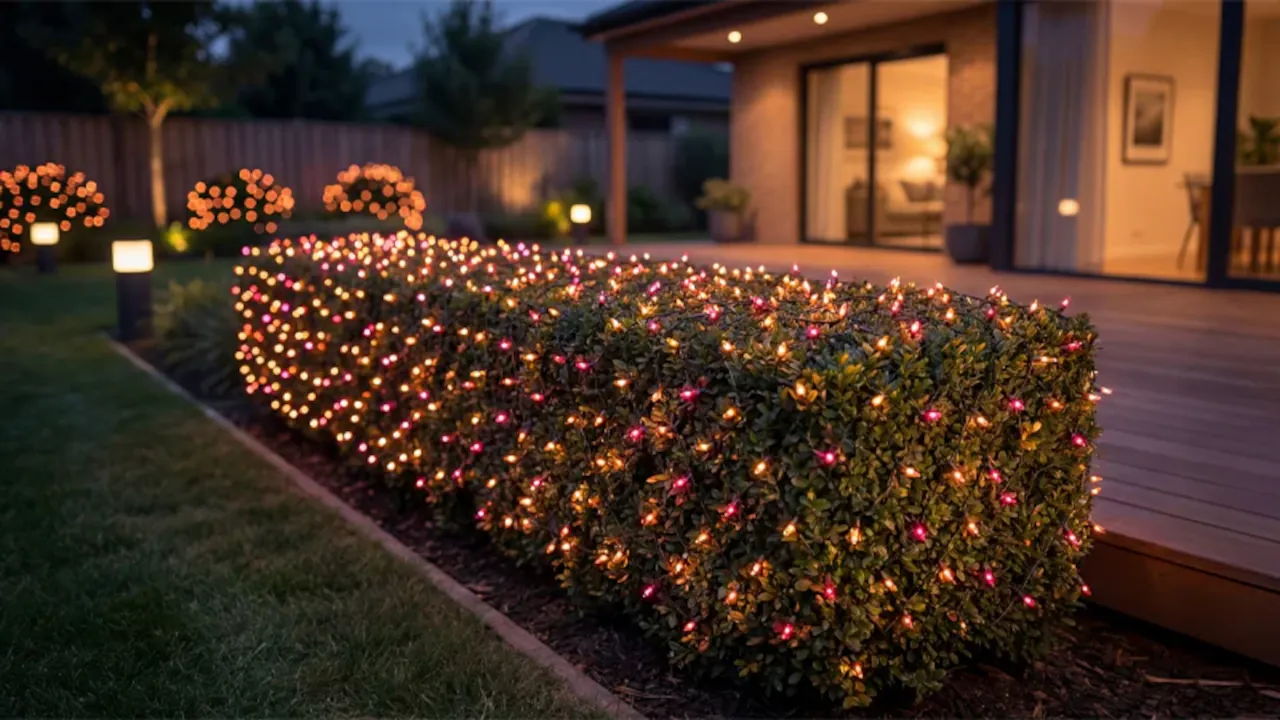
- Hue Festavia curtain, net and icicle lights. Built for balconies, hedges, and roof edges, which makes them an easy Halloween and holiday buy.
- Hue OmniGlow outdoor strip light. The first premium outdoor Hue strip that can be cut to size.
- Hue Scenova outdoor wall lights. Part of a new, more affordable outdoor range alongside the Semeru, Muscari, and Struana fixtures.
Should You Buy Now or Wait?
If you have been holding off on TV sync because of the cost, the wait is over. The Screen Sync camera is the cheapest entry point Hue has ever offered, and it handles native TV apps that the HDMI boxes cannot touch.
If you already own a Hue Bridge and several color lights, the Screen Sync is the simplest upgrade path. If you run everything through one streaming box or a receiver, the sync box 4K gives you better color accuracy for a small step up.
The Custom AI Behaviors feature is the one real catch. It requires the Bridge Pro, so standard Bridge owners will not see it in their app.
Image Credit: Signify / Philips Hue