Most people who buy an “air quality monitor” assume it tells them everything about the air in a room. In reality, it usually measures one thing well and says nothing at all about the other. Understanding the difference between the two main sensor types, and knowing which rooms in a home actually need which one, matters more than picking a specific brand.
Two Different Problems, Two Different Sensors
Air quality complaints usually fall into one of two categories, and each needs a different sensor to detect it. PM2.5 refers to fine particulate matter, the dust, smoke, pollen, and airborne particles that trigger allergies and respiratory irritation. CO2 refers to carbon dioxide buildup, which has nothing to do with particles and everything to do with ventilation. A room can have perfectly clean air by PM2.5 standards while still building up enough CO2 to leave you foggy and unfocused by mid-afternoon. Most budget monitors measure only one of these, so it is worth knowing which one before buying.
PM2.5 Monitors
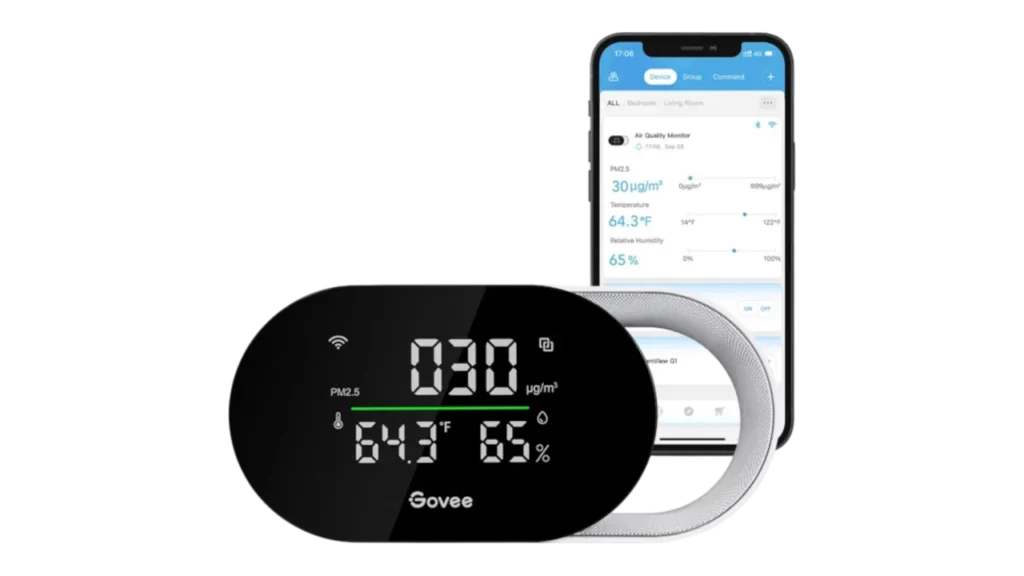
Image Credit: Govee
A PM2.5 monitor is the right tool for dust, allergens, wildfire smoke, or general airborne particles, and it is also the sensor type that actually justifies running an air purifier, since purifiers filter particles rather than exchange air. The Govee Smart Air Quality Monitor tracks PM2.5 alongside temperature and humidity and can trigger a compatible purifier automatically once levels rise.
CO2 Monitors
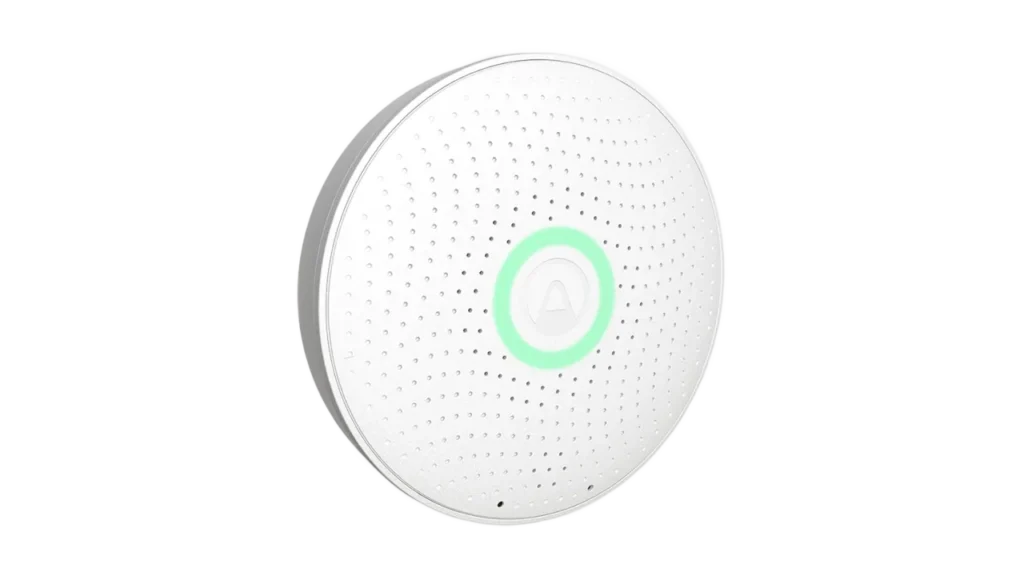
Image Credit: Airthings
A CO2 monitor solves a different problem entirely: it tells you when a closed room needs fresh air, not cleaner air. This matters most in spaces where the door tends to stay shut, such as a home office during calls or a bedroom overnight. The Aranet4 Home is widely regarded as the most accurate consumer CO2 monitor available, using NDIR sensor technology with multi-year battery life. The Airthings Wave Plus also uses an NDIR sensor and adds VOC and radon tracking on top of CO2. Sensor type matters more here than in any other air quality category, since a large share of budget CO2 monitors estimate the figure from a VOC sensor instead of measuring the gas directly. That distinction is worth understanding before buying, so we covered which monitors actually measure it in a dedicated guide.
VOC Monitors
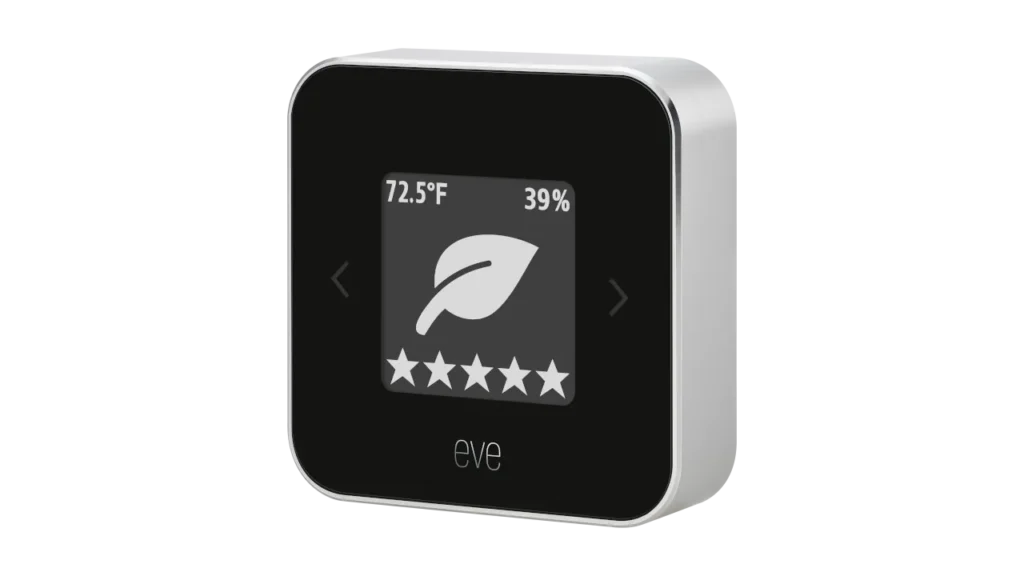
Image Credit: Eve
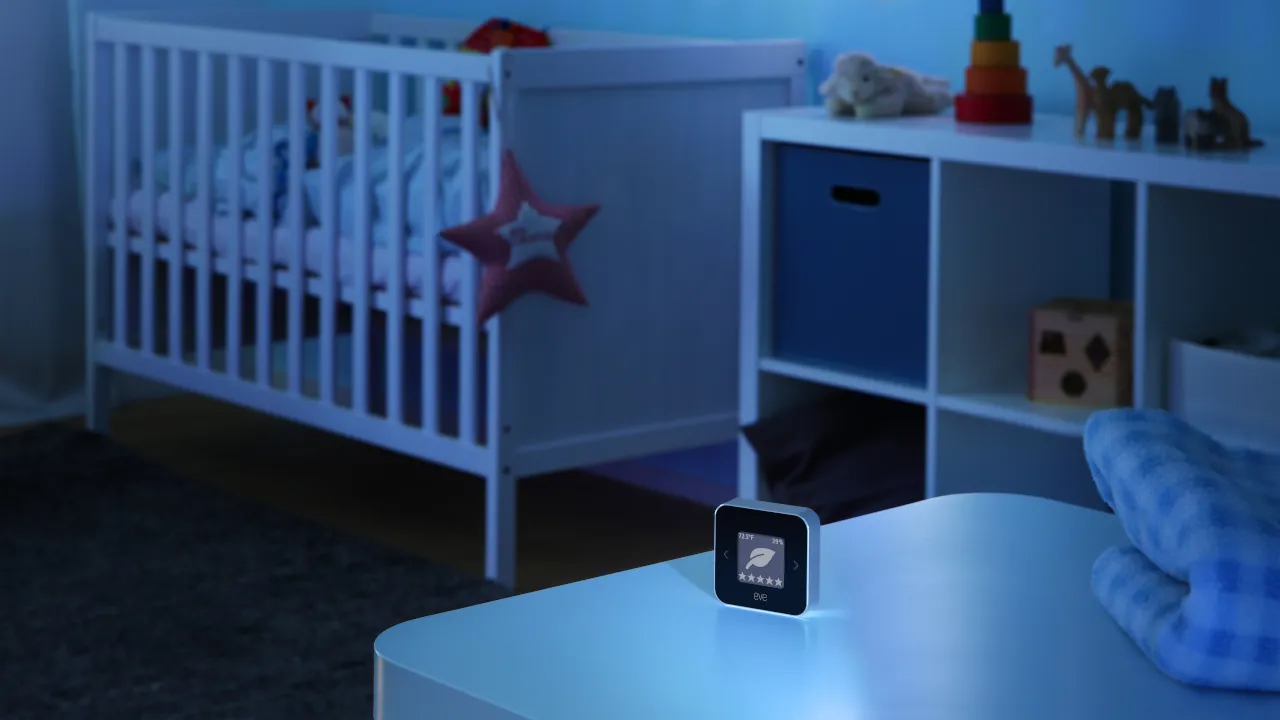
VOC, or volatile organic compounds, is a third air quality metric distinct from both PM2.5 and CO2. It tracks chemical off-gassing from furniture, cleaning products, paint, and similar household sources rather than particles or ventilation. The Eve Room is built specifically around VOC tracking, giving a simple five-star air quality rating alongside temperature and humidity, and it works natively with Apple Home.
Combo Devices (PM2.5 + CO2 in One)
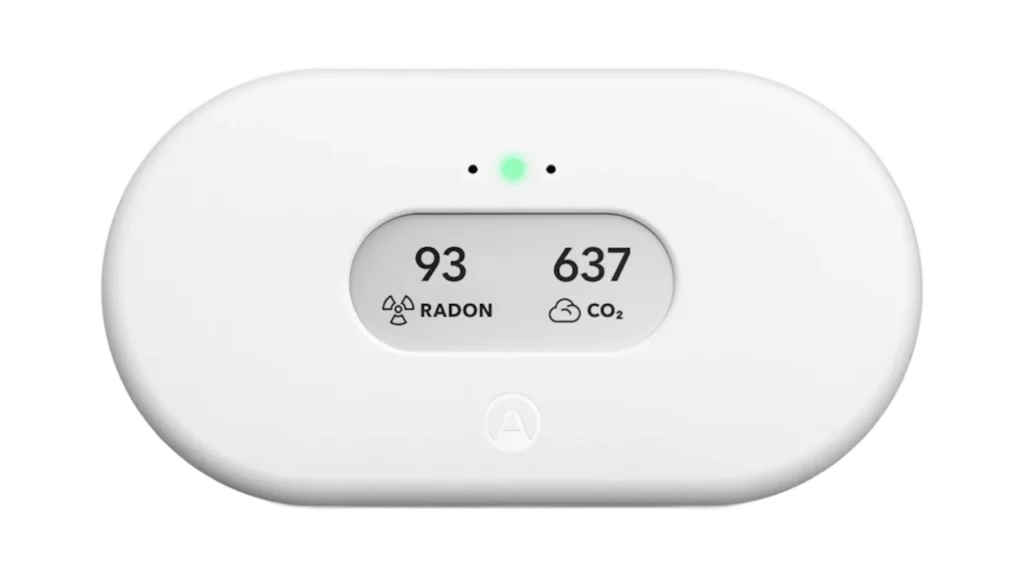
Image Credit: Airthings
A combo device makes sense when a single room genuinely needs both readings, most often a home office, bedroom, or living room where people spend long stretches of time with doors closed. The tradeoff is usually cost and, in some cases, slightly less accuracy on each individual sensor compared to a dedicated single-purpose device. The Airthings View Plus covers PM2.5 and CO2 in one unit, along with VOCs, humidity, temperature, and radon, and it remains one of the most complete options available for a single room that needs full coverage rather than two separate sensors.
A Quick Note on CO (Carbon Monoxide)
CO2 and CO get confused constantly, but they measure entirely different gases with entirely different stakes. CO2 buildup is a comfort and cognitive issue tied to ventilation. CO, or carbon monoxide, is a life-safety issue produced by incomplete combustion in gas appliances, and it is dangerous specifically because it is odorless and undetectable without a dedicated sensor. A CO2 monitor will not detect a CO leak, and a CO detector will not tell you anything about ventilation or particulates. Because CO detection is a safety category rather than a comfort one, it deserves its own dedicated guide rather than a short mention here.
One Sensor Won’t Cover the Whole House
A single monitor placed in one central spot cannot represent air quality throughout an entire home, since closed doors isolate rooms from each other almost completely. A bedroom with the door shut overnight can build up CO2 independently of the rest of the house, regardless of what a sensor in the living room reports. Anywhere a door stays closed for extended periods is a strong candidate for its own dedicated sensor rather than relying on a single whole-home reading.
What Each Room Actually Needs
Not every room benefits from both sensor types, and buying more coverage than a room needs is unnecessary spending. A home office benefits most from CO2 monitoring, since it is a closed-door space where mental fog builds up during long focused stretches. A bedroom often benefits from both PM2.5 and CO2, given how many hours are spent there with the door shut. A boiler or utility room needs a CO detector for safety reasons, not a PM2.5 or CO2 monitor, since neither addresses the actual risk in that space. A living room or open-plan space usually leans more toward PM2.5, given higher foot traffic, cooking, and exposure to outdoor air through doors and windows.
Image Credit: Eve (Lifestyle image)